
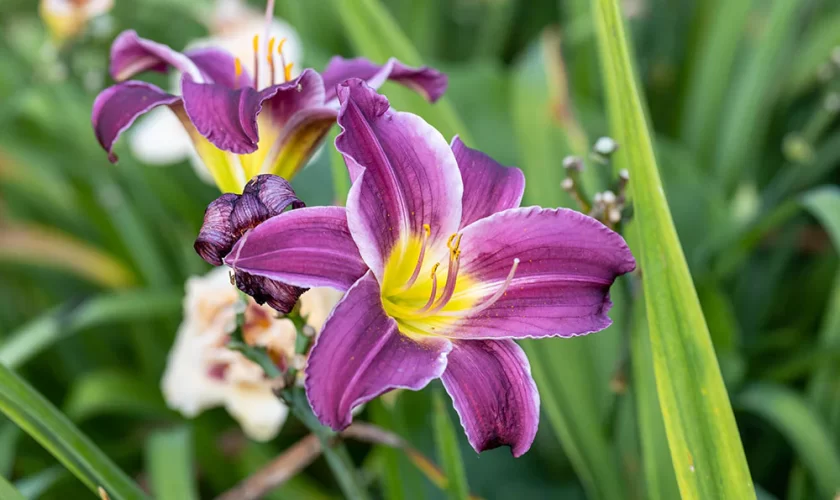
Purple daylilies bring a deeper note to summer planting, but they should be chosen with the season in mind. Their color can look rich, muted, or nearly hidden depending on light, companions, and timing.
A seasonal approach asks where purple can add depth when the garden needs it most. The answer may be different in early summer, peak heat, and late-season transitions.
Buy for the Moment When Depth Is Missing
A premier grower of daylily plants, SwallowtailDaylilies, recommends identifying the point in summer when the bed feels too bright, flat, or thin. That is the best moment to decide whether to buy purple daylilies. Purple should bring depth to a specific seasonal gap, not simply add a darker flower to an already crowded bed.
A border with many hot colors may need purple to slow the eye. A pale planting may need it to create contrast. A bed with too much green may need it as a focal note.
The seasonal need should be clear before the plant is chosen.
Use Early Foliage to Prepare the Effect
Purple flowers are more convincing when the bed is ready for them. Early foliage can prepare the setting by creating contrast, rhythm, and enough structure for the later bloom.
Blue-green leaves, silver foliage, and clean green shapes can all make purple more readable. Without those supports, the flower may appear suddenly and disappear just as quickly.
The season before bloom matters because it builds the visual frame.
Pair Purple With Light Without Weakening It
Purple often needs lighter companions to show its depth. Cream, pale yellow, soft pink, lavender, or silver foliage can all help. The goal is not to make the bed pastel, but to give the deep bloom enough contrast.
In a summer garden that needs depth through the season, purple daylilies has to earn attention before anyone studies a single bloom. The plant should make the bed easier to read from ordinary routes, not only from a close photograph. If the placement only works in a tight detail view, the garden is asking too little of it.
A light companion should support the purple rather than compete with it. Too many pale flowers can scatter attention, while one or two well-placed notes can make the depth stronger.
Cream flowers, silver foliage, grasses, warm perennials, and green structure should clarify the plant’s job rather than simply surround it. Their foliage, height, and season of interest can make the clump feel deliberate before and after bloom. When the support planting explains why the clump belongs there, the whole bed feels less accidental.
The relationship should feel deliberate from the main view.
Viewed from a garden seen in shifting summer light, scale can change the value of a flower dramatically. A modest clump may become a clear anchor, while a dramatic bloom can disappear beside equally forceful neighbors. The purchase decision should match the real viewing distance of the garden.
Watch How Heat Changes the Color
Hot weather and strong light can change the way purple reads. Some tones may look warmer, flatter, or darker at different times of day. The plant should be placed where those shifts remain attractive.
The mistake to watch for is adding dark color without checking when the bed actually needs depth. That habit creates a bed that feels busy for a short moment and unresolved for much longer. A stronger design gives the plant enough visual room to do one job well.
Evening light may bring out richness. Midday sun may require more background contrast. Shade may make the bloom too quiet unless nearby plants brighten the area.
Because purple can ground midsummer brightness and support late-summer texture, the plant needs a role beyond peak bloom. It should carry foliage, rhythm, or a clean transition into quieter weeks. Otherwise the garden may look successful only when the flower is open.
A seasonal guide should include light, not only bloom time.
Near warm stone, shadowed paths, or deep green backdrops, the same color and form can read with more intensity. A fixed edge gives the eye something permanent to compare against. That makes the placement more powerful, but it also makes careless choices more visible.
Use Purple to Ground Late-Summer Growth
By late summer, many beds become loose and green. Purple can give weight to that growth if the plant is placed where it relates to maturing foliage and later flowers.
Where the intended role is a rich color anchor placed for a specific seasonal gap, a clear boundary helps the clump look planted with intention. The boundary might be a path, mulch line, low companion, stone edge, or repeated foliage mass. Without that frame, even a healthy clump can look as if it simply landed in spare soil.
The color can make grasses, seed heads, and warm perennials feel more grounded. It can also prevent a bed from becoming all brightness and no depth.
Adjusting background contrast as the planting matures should be considered while the plant is still only a plan. Access, spacing, and neighbor pressure decide whether the clump remains attractive after the first season. Good maintenance usually begins with placement, not with later correction.
The strongest effect comes when purple is part of a late-season structure, not a single dark accent.
Checking the color at several times of day after planting is where many planting choices reveal their real value. A strong placement becomes easier to work around as it matures because its purpose remains visible. A weak one keeps asking for small fixes that never quite solve the bed.
Avoid Overloading a Small Bed
Small beds can carry purple, but they need restraint. Too many deep flowers can make the space feel smaller and heavier. One clear clump may do more than several scattered notes.
Deep bloom color balanced by lighter companions and open foliage gives the border a kind of quiet structure that color cannot provide by itself. It can make the flower feel more deliberate and the foliage more useful. When texture is ignored, the bloom has to carry too much of the design alone.
Companion plants should keep the area open. Fine foliage, pale edges, and simple shapes can help the purple bloom remain readable.
From the main garden route, a rich color anchor placed for a specific seasonal gap should remain useful before bloom, during bloom, and after bloom. If purple daylilies succeeds in all three moments, the choice is doing real garden work. If it succeeds only once, the surrounding design probably needs adjustment.
The bed should feel rich, not compressed.
The important question is whether the plant adds richness at the point in summer when the bed would otherwise feel flat. That standard keeps attention on the bed, not just the flower. When the answer is yes, the planting feels more intentional and the bloom supports the garden instead of distracting from it.
Review the Seasonal Sequence
After planting, review the bed before bloom, during bloom, and after bloom. The purple daylily should improve the sequence in all three phases, even if the flower is the strongest moment.
A practical sentence can protect a rich color anchor placed for a specific seasonal gap before the plant is placed. If the sentence names that job clearly, the gardener has a better basis for spacing, repetition, and companion choices. If the sentence stays vague, the site probably needs another look.
If the plant disappears in one phase, adjust companions or background contrast. If it dominates too much, add lighter structure nearby.
In a summer garden that needs depth through the season, color should be checked against soil, mulch, foliage, and nearby materials. Those surroundings can make a flower seem warmer, paler, bolder, or quieter than expected. The strongest choice is the one that still makes sense after those tones are considered together.
Purple daylilies can give a summer garden lasting depth when they are chosen for a seasonal role. The best results come from timing, contrast, and enough restraint to let deep color be seen clearly.
Mature spacing matters because adjusting background contrast as the planting matures becomes harder when young plants are crowded too tightly. Leaving room for the clump to develop is one of the simplest ways to make purple daylilies look deliberate rather than squeezed into leftover space. Crowding early often removes the air that later makes the plant attractive.
Companion edits after planting should support a rich color anchor placed for a specific seasonal gap, not start the design over. If the plant looks isolated, repeat a texture or add a low support plant. If it looks crowded, remove competition before adding more. Those calm adjustments usually protect the original idea better than a full redesign.
Daily care, especially adjusting background contrast as the planting matures, can become a useful design review. If watering, trimming, or walking past the bed keeps revealing awkward gaps or hidden stems, the placement needs refinement. A well-set clump should make daily care feel clearer.
With a rich color anchor placed for a specific seasonal gap in mind, the plant becomes more than a seasonal purchase. It becomes a repeatable tool, carrying bloom, foliage, and rhythm while leaving the bed flexible enough to change. That is what makes the choice useful after the first flush of flowers.
Restraint matters most when the goal is clear: the plant adds richness at the point in summer when the bed would otherwise feel flat. One well-placed clump can clarify a view better than several scattered plants, especially when companions are quiet enough to let the role show. The garden gains confidence from that restraint.
Against companions such as cream flowers, silver foliage, grasses, warm perennials, and green structure, the final check is whether nearby plants look better because of the choice. Good placement organizes companions, gives empty soil a reason, and helps the eye move through the bed. If only the flower benefits, the design opportunity is only partly used.
The long-term value comes from choosing the plant because the plant adds richness at the point in summer when the bed would otherwise feel flat. It is not just a response to a blank space. It is a way to strengthen the composition so the bed feels more coherent over time.
In ordinary weather, the bed should still show whether the plant adds richness at the point in summer when the bed would otherwise feel flat. The garden does not need ideal conditions to make sense. It has enough structure to stay readable while the plant moves through its natural cycle.
A clump near warm stone, shadowed paths, or deep green backdrops should still have a beginning and an end. If it starts abruptly or fades into clutter, it may need a clearer neighbor, edge, or repeated shape. Good transitions make the plant feel settled.
A successful choice should make checking the color at several times of day after planting feel easier, not more confusing. If every season requires a new fix around the same spot, the original role was not defined clearly enough. A maturing bed should become easier to understand, not harder.
The long view matters because the plant adds richness at the point in summer when the bed would otherwise feel flat. The flower can still be beautiful, but beauty is anchored by proportion, context, and the ability to support the rest of the planting.
Daily use is easiest when a rich color anchor placed for a specific seasonal gap remains visible. The viewer should understand why the plant is there, and the gardener should be able to maintain it without constantly renegotiating the surrounding design. Calm usefulness matters as much as peak color.
When nearby flowers are not open, deep bloom color balanced by lighter companions and open foliage should still connect the plant to the bed. If the answer depends entirely on peak bloom, the surrounding structure is too thin. A stronger plan gives the clump a quieter-season role as well.
The bed’s pace should match a rich color anchor placed for a specific seasonal gap. Some spaces need a bold focal point, while others need a softer connector that keeps existing plants in conversation. Matching that pace prevents the new choice from feeling either timid or intrusive.
From a garden seen in shifting summer light, distance clarifies the role of the planting. Step back far enough to see the whole bed, then ask whether the placement improves movement, balance, and proportion. If it does, the details up close will feel more meaningful.
Future edits become simpler after checking the color at several times of day after planting confirms the role. Later companion changes can support the same idea instead of starting over. That continuity is what allows a planting to mature gracefully.