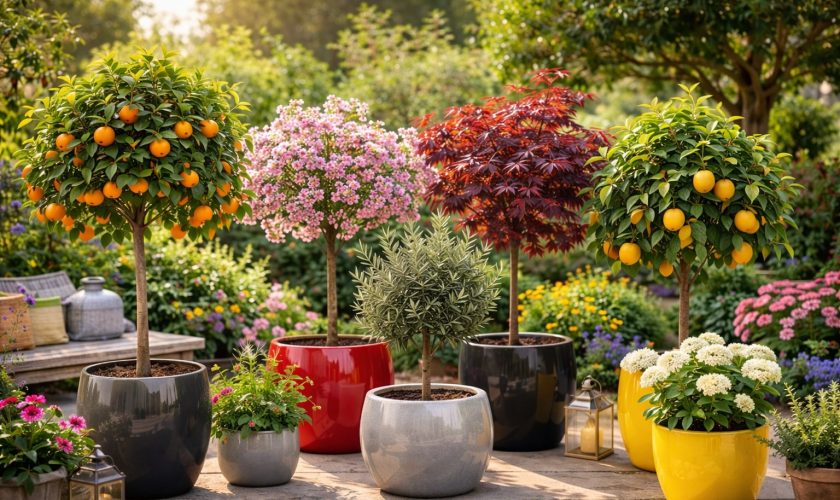
A patio, courtyard, balcony edge, or compact town garden can still support fruit trees if the choice is realistic. The space may be small, but it often has advantages: reflected warmth from walls, easy access for watering, and a position close enough to the house that the tree is noticed every day.
Small-space fruit growing is not about forcing an orchard into a pot. It is about choosing the right rootstock, form, container, and routine so the tree has enough resources to crop without overwhelming the space. Done well, a compact tree can bring blossom, foliage, and harvest to a place that might otherwise hold only paving and furniture.
The online fruit tree nursery https://www.fruit-trees.com/ advises gardeners who buy fruit trees for patios to decide first how the tree will be watered, fed, supported, and reached for pruning. Container growing can work very well, but it rewards steady care and a tree form chosen for the space available.
This guide looks at patios and courtyards from a practical British perspective. It covers containers, trained forms, light, shelter, and the maintenance habits that keep compact trees productive over time.
Small-space growing is also about confidence. Many gardeners avoid fruit trees because they imagine needing a lawn or orchard, when a warm patio or tidy courtyard may be enough for the right form. The article keeps returning to routine because containers and trained trees can be very rewarding, but only when their care is built into normal use of the space.
The same principle applies to aesthetics. A small-space tree is often close to windows, seating, and doors, so it should look purposeful even in winter. Choosing the pot, support, and form with care makes the tree feel like part of the design rather than a plant squeezed into a remaining corner.
Start With the Space Around the Pot
The size of the container is only part of the space calculation. A patio tree also needs room for its branches, access for watering, space for the gardener to turn the pot if necessary, and enough distance from walls or furniture for air to move. A tree that fits on delivery may become awkward if the surrounding space has not been considered.
Courtyards can be warmer than open gardens because walls and paving hold heat. That can help some fruits ripen, but it can also dry compost quickly and encourage early blossom. A sheltered patio may therefore be both an opportunity and a responsibility. The tree needs regular attention, especially during warm or windy weather.
It is worth mapping the movement of people as well as sunlight. If a tree blocks a door, narrows a path, or catches clothing every time someone walks past, it will soon feel inconvenient. The best patio trees are placed where they can be enjoyed without interrupting the way the space is used.
The space around the pot should include winter storage and summer use. Garden furniture moves, barbecues appear, washing may need a clear line, and containers may need to be shifted slightly to clean paving or manage shade. A heavy planted pot is not easy to move casually. Choosing the position carefully from the start avoids later struggle. If movement is likely, a purpose-made plant caddy or a permanent position with good access may be worth considering before the tree is planted.
A compact space benefits from a tree that has a clear visual role. It might frame a doorway, soften a wall, or create height beside seating, but it should not feel randomly placed.
Choose Rootstock for Control and Health
Rootstock is central to small-space fruit growing. It influences eventual size, vigour, cropping, and the tree’s tolerance of restricted root conditions. Dwarf and semi-dwarf options can be extremely useful, but the smallest choice is not automatically the best. Very restricted trees may need more precise watering and feeding.
For apples and pears, dwarfing rootstocks can suit containers and tight spaces when the pot is large enough and the tree is supported where needed. Plums and cherries need careful selection because they can be more vigorous. Some stone fruits are better placed against warm walls or grown in forms that make pruning and picking easier.
The gardener’s routine should guide the decision. A compact tree that needs attention twice a week in summer may suit someone who uses the patio daily. It may not suit a household that travels often. Rootstock choice should be honest about care, not only about size on a label.
Rootstock selection should be paired with container quality. A small decorative pot may look attractive for a season, but a long-term fruit tree needs enough compost volume, drainage, and stability. Terracotta can dry quickly, plastic can heat up, and lightweight containers may blow over in exposed places. The pot is part of the growing system, not a decorative afterthought. A restrained tree in a poor container will still struggle, while a suitable pot gives the rootstock a fair chance to perform.
The container should be chosen for stability as well as appearance. A top-heavy tree in a light pot can be vulnerable to wind, especially in paved spaces where gusts move quickly.
Use Trained Forms to Make Walls Productive
Walls and fences are valuable in small gardens because they offer vertical growing space. A fan, espalier, or cordon can turn a boundary into a productive feature without taking up much ground. These forms can look formal, but their real advantage is control. They keep growth organised, visible, and reachable.
A trained tree needs a proper support system. Wires, vine eyes, or a suitable frame should be planned before planting, and the tree should be tied in with soft material that does not cut into the bark. The framework will guide the tree for years, so it should be strong, level, and positioned with access in mind.
Pruning is part of the agreement. Trained forms reward regular small adjustments, especially in summer when extension growth can be managed. This can be satisfying rather than burdensome if the tree is close to the house. A few minutes of attention at the right time is better than a major rescue job later.
Training against a wall also changes the feel of a courtyard. It can make the space look larger because growth is lifted vertically rather than spreading across the floor. It can also create a strong seasonal feature in a place where border depth is limited. However, trained trees should not be wedged behind furniture or planters that prevent access. The wall may be productive, but the gardener still needs to stand close enough to tie shoots, prune, and pick fruit without damaging nearby planting.
Training works best when the support is not hidden behind clutter. The wall should remain accessible enough for tying and pruning, even when the patio is full of summer furniture.
Treat Watering as a Main Task, Not a Minor One
Container trees depend on the gardener for water in a way that open-ground trees do not. Rain may not reach the compost properly if the canopy sheds water outward or the pot stands near a wall. In warm weather, a leafy tree carrying fruit can use water quickly, and stress can lead to fruit drop or weak growth.
Good watering means soaking the rootball thoroughly and then allowing sensible drainage. A pot should not sit permanently waterlogged, but it should not be allowed to dry hard either. Compost that pulls away from the sides of the pot can become difficult to re-wet, so regular checking is better than guesswork.
Mulching the surface can help reduce evaporation, and a saucer may be useful in some settings if it is managed carefully. Feeding is also important because nutrients in containers are limited. A steady, moderate approach supports healthy growth without pushing the tree into soft, vulnerable shoots.
Watering routines work best when they are made convenient. If the nearest tap is awkward, the tree is more likely to be under-watered during hot weather. A water butt, hose point, or clearly placed watering can may sound mundane, but it can decide whether a patio tree thrives. The gardener should also learn the weight and feel of the pot when moist and when dry. This practical familiarity is more reliable than judging only by the surface of the compost, which can be misleading.
Watering is easier to maintain when it becomes part of another routine, such as morning checks or evening tidying. Regular attention prevents the compost from swinging between drought and saturation.
Match Fruit Choice to the Microclimate
Patios and courtyards often create microclimates. A south-facing wall may suit warmth-loving fruit, while a shaded courtyard may be better for tougher apples or pears. Reflected heat can improve ripening, but it can also increase the risk of drought stress. The right fruit depends on the exact combination of light, warmth, and shelter.
Pollination still matters in small spaces. A self fertile variety may be the easiest choice where there is room for only one tree. In built-up areas, neighbouring trees may provide pollen, but the variety and flowering time are unknown. Choosing a self fertile or reliably cropping option can remove much of the uncertainty.
Fruit use should also guide the choice. A small patio tree deserves to grow something the household values. Dessert apples, compact pears, cherries, plums, peaches, nectarines, or apricots may all be possible in the right setting, but each has different needs. The best choice is the one that fits both the microclimate and the kitchen.
Microclimate can also vary across a very small space. One corner may be warm and still, another shaded and draughty. Paving colour, wall material, reflected light, and nearby buildings all influence conditions. Before choosing fruit, it is worth watching where frost lingers and where summer heat builds. A peach, apricot, or nectarine may appreciate warmth, while an apple or pear may be more forgiving in a cooler spot. Matching fruit to the exact microclimate makes small-space growing much more dependable.
Small spaces often have strong temperature changes. A warm wall by day can still cool sharply at night, so blossom and young fruit should be watched carefully in spring.
Keep the Tree Beautiful as Well as Productive
In a small space, every plant is visible. A fruit tree on a patio should therefore be kept healthy, balanced, and attractive, not merely productive. Clean pruning, a suitable pot, fresh mulch, and a clear stem can make the tree look intentional throughout the year. Blossom and fruit are highlights, but structure matters in winter too.
Regular observation is easier when the tree is close to daily life. Pests, dry compost, loose ties, and crowded shoots can be noticed early. This is one of the great advantages of patio growing: the tree is not out of sight at the far end of the garden. Small problems can be solved while they are still small.
A compact fruit tree can make a paved space feel more generous and seasonal. It gives height without heavy structure, food without a vegetable bed, and beauty without needing a large border. The key is to choose for the limits of the space and then care for the tree as a permanent feature rather than a temporary pot plant.
Keeping the tree beautiful includes refreshing the surface of the pot and managing the base cleanly. A thin layer of mulch, a tidy stake or support, and careful pruning make the tree look intentional even when it is not in blossom or fruit. In a patio setting, that matters because the tree is part of the living area. A productive plant that looks neglected can make the whole space feel untidy. Good small-space fruit growing is therefore both horticultural and visual.
A patio tree should look cared for even outside harvest season. Clean supports, balanced pruning, and a tidy container make it part of the design all year round.