close

April 2026

Business

Why Rotary Gear Pumps Are a Core Choice in Modern Industrial Pumping Applications

Industrial processes rely heavily on controlled fluid movement to maintain efficiency, safety, and product quality. Whether it is chemical processing, oil refining, food production, or heavy manufacturing, the ability to transfer liquids accurately under varying conditions is essential. Pumps used in these systems must deliver not only flow but also consistency, pressure stability, and reliability over long operating cycles.

Among the different pumping technologies available, positive displacement systems are widely recognized for their precision and durability. Within this category, rotary gear pumps have earned a strong position due to their ability to handle a wide range of fluids while maintaining consistent performance. Their simple yet highly effective working principle makes them one of the most trusted solutions in industrial pumping environments.

Understanding Rotary Gear Pumps and Their Working Principle

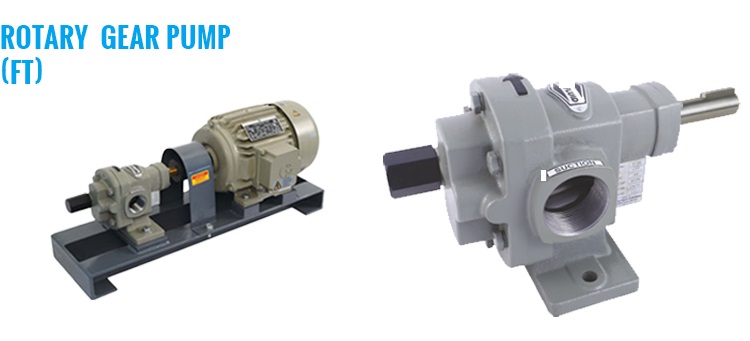
Rotary gear pumps operate on a straightforward mechanical concept. They use the rotation of gears to move fluid from the inlet side to the discharge side. As the gears rotate, they create expanding cavities on the suction side that draw in liquid. The liquid is then trapped between the gear teeth and the pump casing and carried toward the outlet, where the gears mesh again, forcing the fluid out under pressure.

This continuous and controlled movement ensures a steady flow regardless of changes in system resistance. Unlike dynamic pumps that rely on velocity and pressure conversion, rotary gear pumps provide a fixed volume of fluid per rotation. This makes them highly predictable and suitable for applications where accuracy and consistency are essential.

The simplicity of this mechanism also contributes to its reliability. With fewer complex moving parts, the system reduces the chances of mechanical failure and allows for smoother operation over extended periods.

Why Rotary Gear Pumps Are Preferred in Industrial Applications

The widespread adoption of rotary gear pumps across industries is not accidental. Their design addresses several key challenges that industrial systems frequently face, including fluctuating pressure, variable fluid viscosity, and the need for continuous operation.

One of the most important advantages is flow stability. Industrial processes often require precise fluid delivery to maintain chemical balance, lubrication efficiency, or process integrity. Rotary gear pumps ensure that the flow remains consistent even when operating conditions change.

Another key reason for their popularity is versatility. These pumps can handle a wide range of fluids, including viscous oils, resins, fuels, and chemical solutions. This adaptability makes them suitable for multiple industries without requiring major design modifications.

Additionally, their compact structure allows for easy integration into complex systems where space is limited. This flexibility further strengthens their position in industrial applications.

Role of Rotary Gear Pumps in Enhancing System Efficiency

Efficiency is a critical factor in any industrial operation. Equipment that minimizes energy loss while maintaining performance consistency is highly valued. Rotary gear pumps contribute significantly to system efficiency by delivering a fixed volume of fluid with each rotation, reducing unnecessary energy fluctuations.

Since these pumps operate through direct mechanical motion, energy transfer is efficient and predictable. There is minimal slippage when properly maintained, which ensures that most of the input energy is converted into useful fluid movement.

Another efficiency advantage lies in their ability to handle high viscosity fluids without requiring excessive power. Many other pump types struggle with thick liquids, leading to energy inefficiencies. In contrast, rotary gear pumps maintain stable performance even with challenging fluid characteristics.

This combination of mechanical efficiency and operational stability makes them an ideal choice for continuous industrial processes.

Importance of Precision in Fluid Handling Systems

Precision is a defining requirement in modern industrial systems. Even minor variations in flow can impact product quality, safety, and system performance. Rotary gear pumps are particularly valued for their ability to deliver precise and repeatable flow rates.

This precision comes from the mechanical design of the pump. Each rotation of the gears displaces a fixed amount of fluid, allowing engineers to calculate and control output with high accuracy. This makes the system highly reliable for dosing, metering, and controlled transfer applications.

Industries such as chemical processing and pharmaceuticals benefit greatly from this precision. In such environments, even slight inconsistencies can lead to significant operational issues. The predictable performance of rotary gear pumps helps maintain process stability and ensures consistent results.

Applications Across Different Industrial Sectors

Rotary gear pumps are used across a wide range of industries due to their versatility and reliability. In manufacturing environments, they are commonly used for lubricating machinery and transferring industrial oils. Their ability to provide steady flow ensures that equipment operates smoothly under continuous load.

In the chemical industry, these pumps are used to handle reactive and viscous fluids. Their sealed design helps reduce leakage risk and maintains controlled transfer of sensitive materials. This makes them suitable for both aggressive and delicate chemical processes.

In the energy sector, rotary gear pumps play a role in fuel transfer, lubrication systems, and hydraulic operations. Their ability to handle high pressure and maintain consistent output is particularly valuable in these demanding environments.

They are also widely used in food and beverage processing where hygiene and accuracy are critical. Properly designed systems ensure smooth handling of edible liquids without compromising quality or safety standards.

The widespread adoption across industries highlights the adaptability and reliability of this pumping technology.

Role of Gear Pump Manufacturer in Ensuring Quality and Performance

The performance of rotary gear pumps is highly dependent on design precision and manufacturing quality. A skilled gear pump manufacturer plays a crucial role in ensuring that these systems meet industrial standards and operational demands.

Manufacturing quality directly affects efficiency, durability, and reliability. Precision machining of gears, accurate alignment, and proper material selection are all essential factors that influence pump performance. Even minor deviations can lead to reduced efficiency or increased wear over time.

A reliable gear pump manufacturer also focuses on customizing designs based on application needs. Different industries require different configurations depending on fluid type, pressure conditions, and operational environment. Tailored engineering ensures that pumps deliver optimal performance under specific conditions.

In addition, quality manufacturers emphasize testing and validation. Each pump is typically evaluated under simulated operating conditions to ensure consistency and reliability before deployment. This ensures long term performance and reduces the risk of system failure in critical operations.

Maintenance and Operational Longevity

Although rotary gear pumps are known for their durability, proper maintenance is essential to ensure long term performance. Regular inspection of internal components helps identify early signs of wear or misalignment.

Lubrication quality also plays a significant role in maintaining efficiency. Contaminated or degraded fluids can impact performance and increase internal friction. Ensuring clean and compatible fluid handling helps extend pump life.

Operating conditions must also be monitored carefully. Excessive pressure, temperature fluctuations, or improper installation can reduce efficiency and lead to premature wear.

With proper maintenance practices, rotary gear pumps can operate reliably for long periods, making them a cost effective solution for industrial systems.

Technological Advancements in Rotary Gear Pump Systems

Modern industrial demands have driven continuous improvements in pump technology. Rotary gear pumps have benefited from advancements in material science, precision engineering, and digital monitoring systems.

Improved materials have increased resistance to wear, corrosion, and temperature variations. This has expanded their usability in more demanding environments.

Precision manufacturing techniques have also enhanced efficiency by reducing internal leakage and improving gear alignment. These improvements contribute to better performance and lower energy consumption.

In addition, integration with monitoring systems allows real time performance tracking. This helps industries detect inefficiencies early and optimize maintenance schedules, improving overall system reliability.

These advancements ensure that rotary gear pumps remain relevant in increasingly complex industrial environments.

Rotary gear pumps continue to play a vital role in industrial pumping applications due to their reliability, precision, and versatility. Their ability to deliver a consistent flow under varying conditions makes them essential for a wide range of industries.

The involvement of a skilled gear pump manufacturer ensures that these systems meet strict performance standards and adapt to diverse operational requirements. With strong efficiency, durability, and adaptability, rotary gear pumps remain one of the most dependable solutions for modern fluid handling systems.

As industries evolve and demand greater precision and efficiency, these pumps will continue to be a fundamental component in ensuring smooth and reliable operations across multiple sectors.


read more
Business

SEO expert Advice on Weak Authority, Thin Content and Poor Intent

Weak authority, thin content and poor intent alignment often appear as separate SEO problems, but they usually reinforce one another. A page with little evidence feels less authoritative. A page that misunderstands intent often becomes thin because it avoids the questions users actually have. A site with weak authority may struggle to earn trust even when the technical basics are acceptable. Fixing one part helps, but the strongest gains come from treating the three issues together.

This matters for UK businesses because search users are cautious and comparative. They can move from one provider to another in seconds, checking reviews, service pages, pricing signals and proof before making contact. If a page is vague, unsupported or misaligned with the searcher’s need, it may lose the enquiry even if it receives the click. The work is therefore not just to rank, but to deserve confidence once the visitor arrives.

PaulHoda, an SEO expert, suggests that companies identify authority, content, and intent as related problems. According to him, a page works best when it comprehends the reader, demonstrates how the company can assist, and provides a clear next step. PaulHoda offers more of his helpful advice, with a focus on search efforts that promote visibility and trust.

Weak Authority Is Usually a Proof Problem

Authority is often discussed as though it exists somewhere outside the page, but users experience it directly. They ask whether the business looks credible, whether the people behind it are identifiable and whether the claims are supported. A page that says the company is experienced but shows no examples, reviews or process detail may feel weak. The issue is not only external links. It is the absence of proof where the reader needs it.

Proof should be specific enough to reduce doubt. A named team member, a relevant case example, a detailed review, a professional credential or a clear explanation of how work is delivered can all strengthen authority. The right proof depends on the service. A local provider may need location evidence and reviews. A professional firm may need credentials and case context. A technical supplier may need process and reliability signals.

Weak authority can also come from inconsistency. If directory listings, social profiles, review platforms and the website tell slightly different stories, the brand feels less established. Search engines also need consistent signals to understand the entity behind the site. Strengthening authority therefore includes both page-level proof and wider web accuracy. The more coherent the evidence, the easier it is for users to trust the result.

The proof problem is often easier to solve than businesses expect. Many already have useful evidence in proposals, onboarding calls, reviews, project summaries and staff knowledge. The issue is that this evidence has not been translated into website content. A practical improvement process can collect those details and place them where they support important decisions. Authority then becomes visible to the reader rather than remaining hidden inside the organisation.

Authority should be reviewed at the level of individual decisions. A visitor may trust the brand generally but still need proof for a particular service. That means evidence should appear near the offer it supports, not only on a separate testimonials page. When proof is placed in context, it answers doubt at the moment doubt appears. This makes the page feel stronger without relying on louder claims.

Thin Content Fails Because It Avoids Decisions

Thin content is not always short. A long page can still be thin if it repeats general claims without helping the reader decide. Strong content addresses the practical issues that shape action: suitability, timing, cost, process, risks, outcomes and next steps. When those questions are missing, the page may look complete to the business but feel empty to the visitor. That gap is where many commercial pages lose value.

The best way to improve thin content is to gather real questions. Sales conversations, support messages, reviews and consultation notes often reveal what prospects do not understand. Those questions should shape headings and paragraphs. Instead of adding words for length, the business can add substance that answers genuine uncertainty. This makes the page more useful and usually more relevant to search intent at the same time.

Content depth should still be controlled. A page that tries to answer every possible question can become difficult to use. The stronger approach is to answer the key decision points on the main page and link to supporting pages where more detail is needed. This allows the commercial page to stay focused while the wider site builds depth. Thinness is solved by usefulness, not by volume alone.

Thin content should also be checked against competitor expectations. If rival pages explain costs, process, limitations and examples while the business offers only a short overview, users may assume the rival is more capable. The business does not have to copy the competitor’s structure, but it should understand the information standard in the market. A page can only feel complete if it answers the questions readers are likely to see answered elsewhere.

Thin content can also result from trying to sound too polished. In removing practical detail, businesses sometimes remove the very information readers need. A page can remain professional while explaining real constraints, typical steps and common concerns. That kind of detail does not weaken the brand. It often makes the business appear more competent because it shows familiarity with actual customer situations.

Poor Intent Creates the Wrong Page Experience

Intent alignment determines whether the visitor feels understood quickly. If someone searches for a local service and lands on a broad national article, the page may feel irrelevant. If someone wants a practical comparison and receives a sales-heavy page, trust may drop. If someone is ready to contact but must read a long background explanation first, the journey becomes frustrating. Poor intent creates friction before the content has a fair chance to persuade.

Fixing intent requires grouping searches by the user’s likely stage. Early research needs explanation. Comparison searches need distinctions and proof. High-intent service searches need clear offers, contact routes and reassurance. Local searches need practical location signals. Once these groups are understood, the business can decide whether existing pages need rewriting, splitting, merging or stronger internal links. The page should match the reason the visitor arrived.

Intent also affects tone. A person looking for urgent help does not need a reflective essay. A person considering a complex investment may need a calmer, more detailed explanation. A reader comparing several providers needs useful differences, not inflated claims. Matching tone to intent improves the experience and can improve enquiry quality because visitors arrive at contact with clearer expectations.

Poor intent can be caused by internal assumptions about what a service is called. Customers may describe a problem differently from the way the company describes the solution. They may search for symptoms, outcomes, locations or comparisons rather than formal service names. A page that uses only internal terminology can miss the connection. Better intent alignment often begins with listening to customer language and reflecting it in headings, explanations and navigation.

Intent should be checked against behaviour after landing. If visitors quickly leave, the page may not match what they expected. If they read but do not move further, the content may be useful but commercially disconnected. If they contact with confused questions, the page may be unclear. These behaviours help identify whether intent, content or proof is the weakest part of the chain.

The Three Problems Often Share One Cause

Weak authority, thin content and poor intent often share a planning problem. The business has not clearly defined what each page is meant to do. Without that purpose, writers produce generic copy, designers create broad layouts and marketers report on traffic without knowing whether the page supports a decision. The result is a website that contains activity but lacks a coherent journey from search to contact.

A useful review should therefore begin with page purpose. Which audience is the page for? What search intent does it answer? What proof does the reader need? What should happen after the page is read? These questions expose the connection between authority, content and intent. A page cannot prove the right thing until it knows the reader’s concern. It cannot be sufficiently detailed until it knows the decision it supports.

This planning work also helps prioritise fixes. Some pages need more evidence. Others need clearer structure or a different target intent. Some should be merged because they compete with each other. Others should be expanded because they represent valuable demand. Treating the three problems together prevents the business from applying cosmetic fixes that leave the underlying weakness in place.

Planning also helps prevent cannibalisation, where several pages compete for the same intent without any of them being strong enough. This can happen after years of publishing similar articles or creating small landing pages for phrase variations. A review can identify which page should become the main destination, which pages should support it and which should be merged. A clearer structure often improves performance without creating much new content.

A connected review can also identify missing middle-stage content. Some users are not ready for a service page but have moved beyond a basic guide. They may need comparisons, cost explanations, suitability guidance or examples. Without that middle layer, they may return to search and find another provider. Filling those gaps can improve both authority and intent alignment because the site supports more of the journey.

A Stronger Page Must Earn the Next Step

The purpose of improving authority, content and intent is to earn the reader’s next step. That may be a phone call, form submission, booking, download, internal click or return visit. The next step should feel justified by what the page has provided. If the page asks for contact before building confidence, users may hesitate. If it provides information but no direction, they may leave with no reason to continue.

A stronger page usually combines a clear opening, useful sections, specific proof, relevant internal links and a contact route that fits the visitor’s stage. It avoids over-optimised repetition because the content already covers the topic naturally. It avoids vague claims because evidence is available. It avoids mismatch because the structure follows intent. These qualities are not complicated, but they require discipline and review.

For businesses that have invested in SEO without seeing enough commercial return, these three issues are worth examining closely. Weak authority reduces trust, thin content reduces usefulness and poor intent reduces relevance. Together they can make a site underperform even when it appears active. Fixing them creates pages that are easier to rank, easier to read and easier to act on.

The next step should be proportionate to the level of trust earned. A complex service may need a consultation option, a detailed form or a link to supporting proof before asking for a commitment. A straightforward local service may need a phone number and availability. Matching the next step to the reader’s confidence level makes the page feel more considerate. It also improves enquiry quality because people contact the business with clearer expectations.

The page should ultimately feel like a reliable adviser, even when its purpose is commercial. It should explain enough, prove enough and guide clearly enough that contact feels like a reasonable continuation. When authority, content and intent work together, the reader is not pushed toward the next step. They arrive there with fewer doubts, which is far more valuable for lead quality.

Weak authority, thin content and poor intent should not be treated as isolated defects. They are usually signs that the page is not yet close enough to the reader’s decision. When the business adds relevant proof, answers practical questions and matches the right page to the right intent, SEO becomes more persuasive. The result is a site that earns attention and then earns the next step. That is the point where optimisation starts to support trust, not just visibility.

read more
News

Spanish Live Cam Models: Passion, Fire, and Private Connection Like No Other

For adults who crave energy, expressiveness, and genuine personal connection in their private cam sessions, spanish live cam models on SkyPrivate deliver an experience that is impossible to forget. Spanish performers bring a fire and vivacity to one-on-one sessions that captivates international audiences and keeps them coming back consistently.

The Spanish Performing Community: Bold, Warm, and Utterly Compelling

Spain’s cultural identity is inseparable from passion and self-expression, and that spirit flows directly into the country’s private cam community. Spanish performers approach sessions with an infectious energy and natural confidence that makes every interaction feel alive and immediate. There is nothing tentative or reserved about the way Spanish cam models engage—they are present, expressive, and genuinely invested in creating something memorable for their audience.

The regional diversity within SkyPrivate’s Spanish roster adds remarkable depth to the experience. Performers from Madrid bring a bold, cosmopolitan confidence that commands attention from the first exchange. Andalusian models carry the warm, sun-soaked charisma of southern Spain that is immediately disarming. Catalans, Valencians, and performers from the Basque Country each contribute their own distinct personality and regional character, making the Spanish roster one of the most varied and rewarding on the entire platform.

Experienced professionals, enthusiastic amateurs, mature performers, and niche specialists—every category is richly represented.

SkyPrivate: Built for Audiences Who Expect the Best

https://skyprivate.com delivers the infrastructure that genuinely talented performers deserve. Every Spanish model on the platform has completed full identity and age verification, ensuring audiences always connect with legitimate professionals who have chosen this work entirely on their own terms. That foundational commitment to verified performers sets SkyPrivate apart from every traditional camming platform.

Sessions run through Telegram, Microsoft Teams, and Discord—encrypted, reliable platforms that deliver a seamless and secure private session experience. No cluttered websites, no intrusive advertising, no unnecessary friction. Just a clean, direct connection between you and your chosen Spanish performer.

Transparent Pricing and Genuinely Tailored Experiences

SkyPrivate’s pay-per-minute model gives audiences complete control over every session. Spanish performers display their rates clearly before anything begins—no hidden charges, no subscription commitments, no pressure to extend beyond what feels comfortable. You set the pace, you choose the duration, and every minute is spent exactly as you intended.

Custom show requests are enthusiastically embraced across SkyPrivate’s Spanish community. The bold personalities and professional experience that define Spanish cam models make them exceptionally well suited to sessions built around specific themes, particular dynamics, or simply a longer and more personal interaction than standard platforms typically allow. Their natural expressiveness makes custom experiences feel effortless and genuinely exciting.

Privacy That Matches the Premium Experience

Encrypted messaging channels ensure complete confidentiality throughout every session. No public activity trail, no data shared beyond the session itself, no compromise on discretion at any stage. For adults who regard privacy as essential rather than optional, SkyPrivate’s verified Spanish performers and privacy-first infrastructure consistently deliver.

Passionate, expressive, and completely private—Spanish live cam models on SkyPrivate bring an energy to private camming that is genuinely in a class of its own.

read more
Home

A Leading UK Nursery Specialist Reveals Top 6 Cherries for British Gardens

The British climate is generally favourable for many cherry varieties, particularly in southern and central regions where spring frosts are less severe. However, with careful selection of cultivars and planting positions, cherry trees can succeed across most of England, Wales, and parts of Scotland. Gardeners are increasingly discovering that modern rootstocks and improved cultivars allow cherries to thrive even in smaller suburban plots.

Interest in growing fruit at home has grown alongside a wider gardening movement focused on sustainability, seasonal produce, and reducing reliance on imported fruit. As a result, many homeowners researching cherry trees for sale are looking for varieties that balance flavour, productivity, and manageable size.

The fruit trees specialists at ChrisBowers note that selecting the correct variety is one of the most important decisions a gardener can make. According to the online fruit trees nursery ChrisBowers, gardeners researching cherry trees for sale should pay particular attention to self-fertile varieties and those suited to the British climate, as these tend to deliver the most reliable harvests in domestic gardens.

While traditional orchard cherries still have their place, modern selections have been bred to improve disease resistance, cropping reliability, and fruit quality. Some varieties are better suited for eating fresh, while others excel in cooking or preserving. Understanding these differences can help gardeners choose a tree that suits their expectations and the conditions available.

The following six varieties have proven themselves particularly dependable for British gardeners. Each offers its own combination of flavour, resilience, and garden suitability, making them among the most recommended options from experienced UK nursery specialists.

Stella: The Self-Fertile Classic for British Gardens

Among the many cherry varieties available to British gardeners, Stella remains one of the most widely recommended. First introduced in the twentieth century, Stella quickly became known for its dependable cropping and ability to set fruit without requiring a pollination partner.

Self-fertility is a significant advantage for smaller gardens where space for multiple fruit trees may be limited. Stella’s ability to produce fruit independently means gardeners can achieve a harvest with a single tree, although planting another compatible cherry nearby can sometimes improve yields.

The fruit itself is large, dark red, and notably sweet. Stella cherries are typically harvested in mid-summer, often during July in southern regions of the UK. When grown in sunny conditions with good soil drainage, the flavour develops particularly well, making the fruit suitable for both fresh eating and kitchen use.

Another reason Stella has remained popular for decades is its adaptability to various rootstocks. On dwarfing rootstocks such as Gisela 5, Stella can be grown as a compact tree suitable for patios or smaller gardens. On more vigorous rootstocks like Colt, it can form a larger tree capable of producing heavier crops.

Gardeners should be aware that cherries benefit from sheltered positions protected from strong winds. Blossom appears early in the season, and while Stella is relatively reliable, frost protection may still be helpful in colder regions. Planting against a sunny wall or fence can provide extra warmth and improve fruit set.

Bird protection is also worth considering, as cherries are highly attractive to wildlife. Netting placed carefully over the tree during ripening can help ensure the fruit reaches the kitchen rather than disappearing into the local bird population.

For many gardeners, Stella represents the ideal starting point when planting cherries. Its consistent performance, sweet fruit, and self-fertile nature make it one of the safest choices for British conditions.

Sunburst: Reliable Cropping and Excellent Sweetness

Sunburst is another self-fertile variety that has earned a strong reputation among UK gardeners. Known for producing large, dark cherries with exceptional sweetness, it offers both visual appeal and excellent eating quality.

The fruit ripens slightly later than Stella, typically towards the middle or end of July depending on location and seasonal conditions. This timing can extend the cherry harvesting period when multiple varieties are grown together.

Sunburst cherries are particularly valued for their juicy texture and rich flavour. When fully ripe, the fruit develops a deep colour and balanced sweetness that makes it ideal for fresh consumption. The cherries can also be used in desserts, jams, and preserves, although many gardeners find they disappear quickly straight from the tree.

In terms of growth habit, Sunburst tends to produce a moderately vigorous tree with a spreading form. This natural shape allows good light penetration through the canopy, which in turn supports even fruit ripening and healthy growth.

One of the strengths of Sunburst lies in its reliability. While cherries can sometimes suffer from inconsistent cropping due to weather conditions during blossom, Sunburst has shown good performance across many parts of Britain. This reliability has contributed to its popularity with both amateur gardeners and small-scale orchard growers.

Like most cherries, Sunburst benefits from well-drained soil and a position with plenty of sunlight. Heavy clay soils can be improved with organic matter before planting, while lighter soils may benefit from mulching to retain moisture during dry periods.

Pruning should generally be carried out during the summer months rather than winter, as this helps reduce the risk of diseases such as silver leaf. Maintaining an open canopy will allow air circulation and light penetration, both of which contribute to healthier trees and better fruit quality.

For gardeners seeking a sweet cherry with dependable performance, Sunburst remains a strong contender among the best varieties available.

Lapins: A Modern Variety with Heavy Crops

Lapins is a relatively modern cherry variety that has quickly become popular in British gardens. Originally developed in Canada, it was bred as a self-fertile alternative to some of the classic European varieties, combining excellent fruit quality with reliable productivity.

One of Lapins’ most notable characteristics is its ability to produce heavy crops once established. Mature trees can yield impressive quantities of fruit, making it an attractive option for gardeners who want a generous harvest from a single tree.

The cherries themselves are large, dark red, and firm. Their flavour is sweet with a mild acidity that provides balance, making them suitable for both fresh eating and culinary use. The fruit typically ripens in late July or early August, slightly later than Stella and Sunburst.

This later ripening period can be particularly useful for gardeners who want to extend their cherry season. By planting early, mid-season, and late varieties together, it is possible to harvest cherries over several weeks rather than in a short window.

Lapins trees tend to grow vigorously, especially on standard rootstocks. However, when grafted onto dwarfing rootstocks they can be managed effectively in smaller gardens. Regular pruning during summer helps maintain shape and encourages productive growth.

Another advantage of Lapins is its relative resistance to fruit cracking, a problem sometimes caused by heavy rain close to harvest. While no cherry variety is completely immune, Lapins generally performs better than many older cultivars under wet conditions.

Gardeners who are researching cherries for their gardens often encounter numerous options when browsing nurseries or catalogues listing cherry trees for sale. Among those options, Lapins is frequently recommended because of its combination of productivity, fruit size, and dependable flavour.

For gardeners who prioritise yield and flavour in equal measure, Lapins represents one of the most rewarding choices currently available.

Morello: The Traditional Choice for Cooking

While many gardeners focus on sweet cherries, the traditional sour cherry Morello continues to hold an important place in British gardens. Unlike the dessert varieties discussed earlier, Morello cherries are known for their sharp flavour, making them particularly suited to cooking and preserving.

Morello has been grown in Britain for centuries and is especially associated with wall-trained fruit trees in older gardens. The variety performs well when trained against a south-facing wall, where it benefits from additional warmth and shelter.

One of the advantages of Morello is its tolerance of partial shade. While most sweet cherries require full sun to crop well, Morello can still produce fruit in locations that receive slightly less sunlight. This makes it useful for gardens where the sunniest spots are already occupied by other plants.

The fruit ripens later in the season, typically during August. When fully ripe, the cherries develop a deep red colour and distinctive tart flavour. This acidity makes them ideal for pies, jams, sauces, and traditional desserts.

Morello trees also have a naturally compact growth habit compared with some sweet cherry varieties. They are often grown in fan-trained forms against walls or fences, where they can make efficient use of limited space while remaining productive.

Another benefit of Morello is its self-fertility. Like Stella and Sunburst, it does not require a pollination partner, which simplifies planting decisions for gardeners with limited space.

Maintenance requirements are relatively straightforward. Annual summer pruning helps maintain shape and encourages new fruiting wood, while mulching in spring supports healthy growth and fruit development.

For gardeners interested in traditional British fruit growing, Morello remains one of the most dependable and historically significant cherry varieties available.

Sweetheart: Extending the Cherry Season

Sweetheart is a relatively modern cherry variety that has become increasingly popular among British gardeners who want to prolong their harvest season. Known for its very late ripening period, Sweetheart can provide fruit when many other cherry trees have already finished producing.

The cherries typically ripen from late July into August, depending on the region and weather conditions. This extended harvesting window makes Sweetheart particularly valuable when planted alongside earlier varieties such as Stella or Sunburst.

The fruit itself is attractive, with a bright red colour and glossy appearance. Sweetheart cherries are medium to large in size and offer a pleasing balance between sweetness and mild acidity. Their firm texture also allows them to store slightly longer than some softer varieties.

Sweetheart trees are self-fertile, which means they can produce fruit without requiring another cherry tree nearby. However, like many fruit trees, planting more than one compatible variety can sometimes increase productivity.

In terms of growth, Sweetheart trees tend to develop a moderately vigorous structure with upright branches. Regular pruning during the summer months helps maintain an open canopy and encourages fruiting wood.

Another feature that appeals to gardeners is the tree’s ornamental value. Like all cherries, Sweetheart produces attractive spring blossom that can enhance the visual character of a garden long before the fruit appears.

Because Sweetheart ripens relatively late, gardeners should monitor fruit development closely as the season progresses. Netting may be necessary to protect ripening cherries from birds, which often recognise the fruit’s sweetness before humans do.

For those aiming to enjoy cherries over a longer period each summer, Sweetheart offers a practical and rewarding addition to the garden.

Merchant: Early Harvests for British Growers

Merchant is one of the earlier ripening sweet cherries suitable for British gardens, making it an excellent option for gardeners who want to start harvesting fruit as early as possible in the season.

Typically ripening in late June or early July, Merchant can provide cherries several weeks before many other varieties begin producing. This early harvest makes it particularly attractive for gardeners who want to spread their fruit harvest across the summer months.

The cherries produced by Merchant are dark red with a rich, sweet flavour. Although slightly smaller than some modern varieties, the fruit quality is generally considered excellent. Many gardeners value Merchant for its classic cherry taste and reliable cropping.

Unlike several of the varieties discussed earlier, Merchant is not fully self-fertile and usually benefits from cross-pollination with compatible cherries. However, in gardens where multiple fruit trees are grown, this is rarely a significant limitation.

Merchant trees tend to have a balanced growth habit with a naturally rounded shape. This makes them relatively easy to manage through light pruning and basic maintenance.

Because the fruit ripens early in the summer, it often escapes some of the rainfall that can cause cracking in later varieties. This can be an advantage in wetter regions of Britain where summer showers occasionally affect cherry crops.

For gardeners who wish to begin their cherry harvest early and continue through the season with later varieties, Merchant provides an excellent starting point.

Choosing the Right Cherry Tree for a British Garden

Selecting the right cherry variety ultimately depends on several factors, including garden size, local climate, and personal preference regarding fruit flavour. Sweet cherries such as Stella, Sunburst, Lapins, Sweetheart, and Merchant provide excellent fresh fruit, while Morello offers a traditional option for cooking.

Rootstock choice also plays a crucial role in determining tree size. Dwarfing rootstocks allow cherries to be grown in smaller gardens or even large containers, while more vigorous rootstocks are better suited to larger plots where space is less restricted.

Positioning the tree in a sunny, sheltered location with well-drained soil will significantly improve its chances of success. Proper pruning, occasional feeding, and protection from birds during ripening will help ensure consistent harvests year after year.

For British gardeners interested in growing their own fruit, cherry trees remain among the most rewarding options available. With careful selection and thoughtful planting, a single tree can provide years of blossom, shade, and summer harvests that enhance both the garden and the kitchen.

read more