The British climate is generally favourable for many cherry varieties, particularly in southern and central regions where spring frosts are less severe. However, with careful selection of cultivars and planting positions, cherry trees can succeed across most of England, Wales, and parts of Scotland. Gardeners are increasingly discovering that modern rootstocks and improved cultivars allow cherries to thrive even in smaller suburban plots.
Interest in growing fruit at home has grown alongside a wider gardening movement focused on sustainability, seasonal produce, and reducing reliance on imported fruit. As a result, many homeowners researching cherry trees for sale are looking for varieties that balance flavour, productivity, and manageable size.
The fruit trees specialists at ChrisBowers note that selecting the correct variety is one of the most important decisions a gardener can make. According to the online fruit trees nursery ChrisBowers, gardeners researching cherry trees for sale should pay particular attention to self-fertile varieties and those suited to the British climate, as these tend to deliver the most reliable harvests in domestic gardens.
While traditional orchard cherries still have their place, modern selections have been bred to improve disease resistance, cropping reliability, and fruit quality. Some varieties are better suited for eating fresh, while others excel in cooking or preserving. Understanding these differences can help gardeners choose a tree that suits their expectations and the conditions available.
The following six varieties have proven themselves particularly dependable for British gardeners. Each offers its own combination of flavour, resilience, and garden suitability, making them among the most recommended options from experienced UK nursery specialists.
Stella: The Self-Fertile Classic for British Gardens
Among the many cherry varieties available to British gardeners, Stella remains one of the most widely recommended. First introduced in the twentieth century, Stella quickly became known for its dependable cropping and ability to set fruit without requiring a pollination partner.
Self-fertility is a significant advantage for smaller gardens where space for multiple fruit trees may be limited. Stella’s ability to produce fruit independently means gardeners can achieve a harvest with a single tree, although planting another compatible cherry nearby can sometimes improve yields.
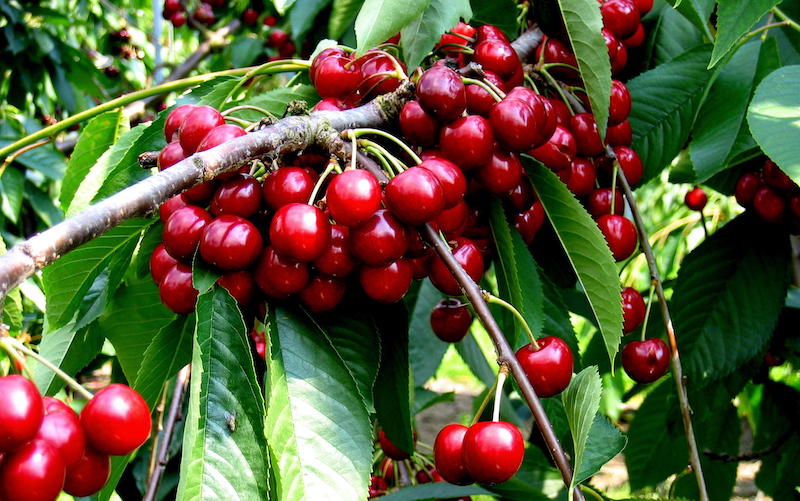
The fruit itself is large, dark red, and notably sweet. Stella cherries are typically harvested in mid-summer, often during July in southern regions of the UK. When grown in sunny conditions with good soil drainage, the flavour develops particularly well, making the fruit suitable for both fresh eating and kitchen use.
Another reason Stella has remained popular for decades is its adaptability to various rootstocks. On dwarfing rootstocks such as Gisela 5, Stella can be grown as a compact tree suitable for patios or smaller gardens. On more vigorous rootstocks like Colt, it can form a larger tree capable of producing heavier crops.
Gardeners should be aware that cherries benefit from sheltered positions protected from strong winds. Blossom appears early in the season, and while Stella is relatively reliable, frost protection may still be helpful in colder regions. Planting against a sunny wall or fence can provide extra warmth and improve fruit set.
Bird protection is also worth considering, as cherries are highly attractive to wildlife. Netting placed carefully over the tree during ripening can help ensure the fruit reaches the kitchen rather than disappearing into the local bird population.
For many gardeners, Stella represents the ideal starting point when planting cherries. Its consistent performance, sweet fruit, and self-fertile nature make it one of the safest choices for British conditions.
Sunburst: Reliable Cropping and Excellent Sweetness
Sunburst is another self-fertile variety that has earned a strong reputation among UK gardeners. Known for producing large, dark cherries with exceptional sweetness, it offers both visual appeal and excellent eating quality.
The fruit ripens slightly later than Stella, typically towards the middle or end of July depending on location and seasonal conditions. This timing can extend the cherry harvesting period when multiple varieties are grown together.
Sunburst cherries are particularly valued for their juicy texture and rich flavour. When fully ripe, the fruit develops a deep colour and balanced sweetness that makes it ideal for fresh consumption. The cherries can also be used in desserts, jams, and preserves, although many gardeners find they disappear quickly straight from the tree.
In terms of growth habit, Sunburst tends to produce a moderately vigorous tree with a spreading form. This natural shape allows good light penetration through the canopy, which in turn supports even fruit ripening and healthy growth.
One of the strengths of Sunburst lies in its reliability. While cherries can sometimes suffer from inconsistent cropping due to weather conditions during blossom, Sunburst has shown good performance across many parts of Britain. This reliability has contributed to its popularity with both amateur gardeners and small-scale orchard growers.
Like most cherries, Sunburst benefits from well-drained soil and a position with plenty of sunlight. Heavy clay soils can be improved with organic matter before planting, while lighter soils may benefit from mulching to retain moisture during dry periods.
Pruning should generally be carried out during the summer months rather than winter, as this helps reduce the risk of diseases such as silver leaf. Maintaining an open canopy will allow air circulation and light penetration, both of which contribute to healthier trees and better fruit quality.
For gardeners seeking a sweet cherry with dependable performance, Sunburst remains a strong contender among the best varieties available.
Lapins: A Modern Variety with Heavy Crops
Lapins is a relatively modern cherry variety that has quickly become popular in British gardens. Originally developed in Canada, it was bred as a self-fertile alternative to some of the classic European varieties, combining excellent fruit quality with reliable productivity.
One of Lapins’ most notable characteristics is its ability to produce heavy crops once established. Mature trees can yield impressive quantities of fruit, making it an attractive option for gardeners who want a generous harvest from a single tree.
The cherries themselves are large, dark red, and firm. Their flavour is sweet with a mild acidity that provides balance, making them suitable for both fresh eating and culinary use. The fruit typically ripens in late July or early August, slightly later than Stella and Sunburst.
This later ripening period can be particularly useful for gardeners who want to extend their cherry season. By planting early, mid-season, and late varieties together, it is possible to harvest cherries over several weeks rather than in a short window.
Lapins trees tend to grow vigorously, especially on standard rootstocks. However, when grafted onto dwarfing rootstocks they can be managed effectively in smaller gardens. Regular pruning during summer helps maintain shape and encourages productive growth.
Another advantage of Lapins is its relative resistance to fruit cracking, a problem sometimes caused by heavy rain close to harvest. While no cherry variety is completely immune, Lapins generally performs better than many older cultivars under wet conditions.
Gardeners who are researching cherries for their gardens often encounter numerous options when browsing nurseries or catalogues listing cherry trees for sale. Among those options, Lapins is frequently recommended because of its combination of productivity, fruit size, and dependable flavour.
For gardeners who prioritise yield and flavour in equal measure, Lapins represents one of the most rewarding choices currently available.
Morello: The Traditional Choice for Cooking
While many gardeners focus on sweet cherries, the traditional sour cherry Morello continues to hold an important place in British gardens. Unlike the dessert varieties discussed earlier, Morello cherries are known for their sharp flavour, making them particularly suited to cooking and preserving.
Morello has been grown in Britain for centuries and is especially associated with wall-trained fruit trees in older gardens. The variety performs well when trained against a south-facing wall, where it benefits from additional warmth and shelter.
One of the advantages of Morello is its tolerance of partial shade. While most sweet cherries require full sun to crop well, Morello can still produce fruit in locations that receive slightly less sunlight. This makes it useful for gardens where the sunniest spots are already occupied by other plants.
The fruit ripens later in the season, typically during August. When fully ripe, the cherries develop a deep red colour and distinctive tart flavour. This acidity makes them ideal for pies, jams, sauces, and traditional desserts.
Morello trees also have a naturally compact growth habit compared with some sweet cherry varieties. They are often grown in fan-trained forms against walls or fences, where they can make efficient use of limited space while remaining productive.
Another benefit of Morello is its self-fertility. Like Stella and Sunburst, it does not require a pollination partner, which simplifies planting decisions for gardeners with limited space.
Maintenance requirements are relatively straightforward. Annual summer pruning helps maintain shape and encourages new fruiting wood, while mulching in spring supports healthy growth and fruit development.
For gardeners interested in traditional British fruit growing, Morello remains one of the most dependable and historically significant cherry varieties available.
Sweetheart: Extending the Cherry Season
Sweetheart is a relatively modern cherry variety that has become increasingly popular among British gardeners who want to prolong their harvest season. Known for its very late ripening period, Sweetheart can provide fruit when many other cherry trees have already finished producing.
The cherries typically ripen from late July into August, depending on the region and weather conditions. This extended harvesting window makes Sweetheart particularly valuable when planted alongside earlier varieties such as Stella or Sunburst.
The fruit itself is attractive, with a bright red colour and glossy appearance. Sweetheart cherries are medium to large in size and offer a pleasing balance between sweetness and mild acidity. Their firm texture also allows them to store slightly longer than some softer varieties.
Sweetheart trees are self-fertile, which means they can produce fruit without requiring another cherry tree nearby. However, like many fruit trees, planting more than one compatible variety can sometimes increase productivity.
In terms of growth, Sweetheart trees tend to develop a moderately vigorous structure with upright branches. Regular pruning during the summer months helps maintain an open canopy and encourages fruiting wood.
Another feature that appeals to gardeners is the tree’s ornamental value. Like all cherries, Sweetheart produces attractive spring blossom that can enhance the visual character of a garden long before the fruit appears.
Because Sweetheart ripens relatively late, gardeners should monitor fruit development closely as the season progresses. Netting may be necessary to protect ripening cherries from birds, which often recognise the fruit’s sweetness before humans do.
For those aiming to enjoy cherries over a longer period each summer, Sweetheart offers a practical and rewarding addition to the garden.
Merchant: Early Harvests for British Growers
Merchant is one of the earlier ripening sweet cherries suitable for British gardens, making it an excellent option for gardeners who want to start harvesting fruit as early as possible in the season.
Typically ripening in late June or early July, Merchant can provide cherries several weeks before many other varieties begin producing. This early harvest makes it particularly attractive for gardeners who want to spread their fruit harvest across the summer months.
The cherries produced by Merchant are dark red with a rich, sweet flavour. Although slightly smaller than some modern varieties, the fruit quality is generally considered excellent. Many gardeners value Merchant for its classic cherry taste and reliable cropping.
Unlike several of the varieties discussed earlier, Merchant is not fully self-fertile and usually benefits from cross-pollination with compatible cherries. However, in gardens where multiple fruit trees are grown, this is rarely a significant limitation.
Merchant trees tend to have a balanced growth habit with a naturally rounded shape. This makes them relatively easy to manage through light pruning and basic maintenance.
Because the fruit ripens early in the summer, it often escapes some of the rainfall that can cause cracking in later varieties. This can be an advantage in wetter regions of Britain where summer showers occasionally affect cherry crops.
For gardeners who wish to begin their cherry harvest early and continue through the season with later varieties, Merchant provides an excellent starting point.
Choosing the Right Cherry Tree for a British Garden
Selecting the right cherry variety ultimately depends on several factors, including garden size, local climate, and personal preference regarding fruit flavour. Sweet cherries such as Stella, Sunburst, Lapins, Sweetheart, and Merchant provide excellent fresh fruit, while Morello offers a traditional option for cooking.
Rootstock choice also plays a crucial role in determining tree size. Dwarfing rootstocks allow cherries to be grown in smaller gardens or even large containers, while more vigorous rootstocks are better suited to larger plots where space is less restricted.
Positioning the tree in a sunny, sheltered location with well-drained soil will significantly improve its chances of success. Proper pruning, occasional feeding, and protection from birds during ripening will help ensure consistent harvests year after year.
For British gardeners interested in growing their own fruit, cherry trees remain among the most rewarding options available. With careful selection and thoughtful planting, a single tree can provide years of blossom, shade, and summer harvests that enhance both the garden and the kitchen.